In cribbage, a skunk refers to a game where one player wins by a very large margin. While skunk rules are optional, they are commonly used in casual play and some competitive settings to add stakes or penalties.
This page explains what a skunk is in cribbage, how skunk scoring works, and when the rule applies.
For the full game rules, start here:
What Is a Skunk in Cribbage?
A skunk occurs when the losing player fails to reach a certain score before the winner reaches 121 points.
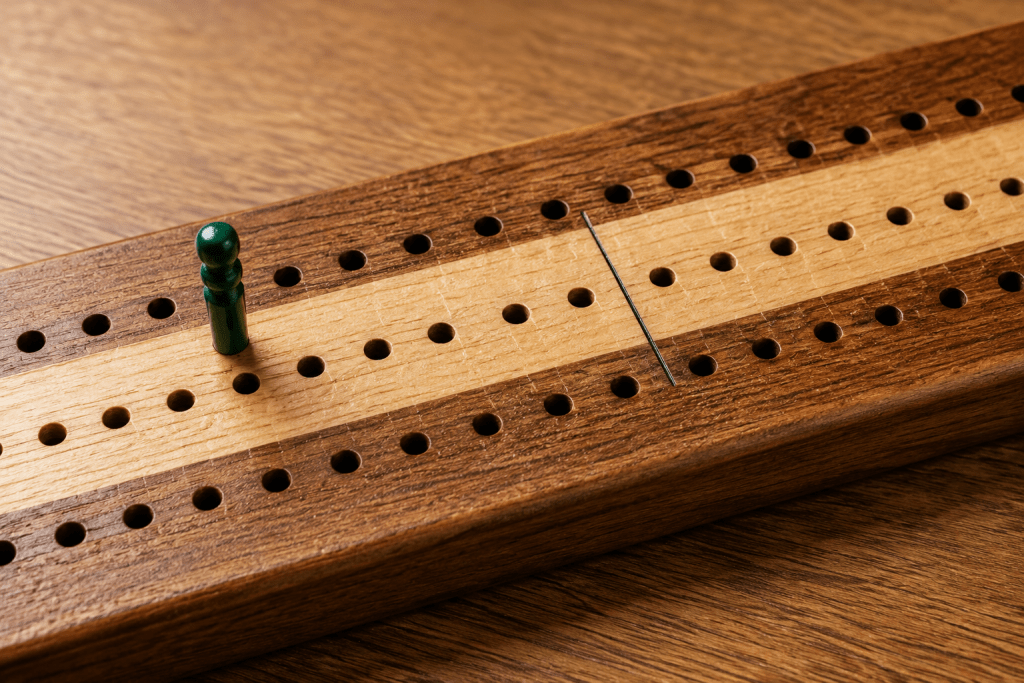
This means the winner beats the opponent by 31 points or more — the loser hasn’t passed the skunk line at hole 91 on the board.
Standard Skunk Rule (Most Common)
- Winner: Reaches 121 points
- Loser: Scores 90 points or less
- Result: The loser is skunked
This version is widely used in casual and club play.
Skunk Quick Reference
| Type | Loser’s Score | Typical Penalty |
|---|---|---|
| No skunk | 91–120 points | Normal loss — 1 game |
| Skunk | Fewer than 91 points | Double loss — counts as 2 games |
| Double skunk | Fewer than 61 points | Triple loss — counts as 3 games |
| Triple skunk | Fewer than 31 points | Rare — counts as 4 games (house rules vary) |
Note: These penalties are not fixed by any official rulebook. They are house rules and vary between groups, leagues, and regions. Always agree on the penalty structure before the game starts.
🃏 Free Printable
Free Cribbage Cheat Sheet (Printable)
New to cribbage? Download this free printable and keep it beside you while you play — covers scoring combinations, pegging examples, round order, and common beginner mistakes.
Instant PDF • Printable • Beginner friendly
Double Skunk Rule
Some players use a stricter rule called a double skunk.
Typical definition:
- Loser scores 60 points or fewer
A double skunk usually carries a larger penalty than a regular skunk.
How Skunk Scoring Works
Skunk rules don’t change how points are scored during the game. Instead, they affect the final outcome.
Common approaches include:
- Counting a skunk as two wins
- Assigning extra points or penalties
- Playing a rematch with reversed roles
The exact scoring depends on house rules.
Are Skunk Rules Official?
Skunk rules are optional.
- They are common in friendly games
- Often used in leagues or clubs
- Not required by the core rules of cribbage
Always agree on skunk rules before starting a game.
Does a Skunk End the Game Early?
No.
- The game always continues until a player reaches 121 points
- A skunk is determined after the game ends
- You do not stop early once a skunk is guaranteed
👉 Learn how games end: Cribbage Endgame Rules
Why Players Use Skunk Rules
Skunk rules are popular because they:
- Add consequences to lopsided games
- Encourage consistent play
- Reward strong pegging and discard decisions
They can make matches more competitive, even between players of different skill levels.
Strategy Implications of Skunk Rules
Skunk rules don’t change how points are scored during the game, but they can and should change how you play in certain situations.
If you are in danger of being skunked — below 91 points while your opponent approaches 121:
You need to take risks. Play aggressively during pegging even if it means giving your opponent opportunities. Chase runs and pairs rather than playing defensively. At this point a conservative approach guarantees the skunk — an aggressive one at least gives you a chance to cross the line.
If you are close to skunking your opponent — they are below 91 while you approach 121:
Don’t change your strategy dramatically, but be aware of the board. If your opponent is at 88 points and needs a good hand to cross 91, you may want to peg more defensively to prevent them from scoring the points they need. Denying them those 3 points matters more than usual.
If skunk rules are in play, every pegging point counts double in meaning. A 2-point fifteen during pegging could be the difference between being skunked and escaping it. Players who understand skunk thresholds are more alert to the board position throughout the game — not just in the final few hands.
The skunk line on the board (hole 91) is a visual reminder. Many experienced players glance at it regularly to track whether either player is in danger. Make it a habit to check both pegs against the skunk line from the midpoint of the game onward.
👉 Beginner strategy: Cribbage Strategy for Beginners
🏆 Strategy Guide
How to Win at Cribbage
Avoid the skunk, or push for one. This guide shows you how to play the board when the game is slipping away.
- When a lost game becomes a race to 91
- How to play defensively to keep a skunk in play
- Counting-out odds and 8 practice scenarios
18-page printable PDF · 10% off applied at checkout
Common Skunk Rule Mistakes
- Assuming skunk rules are automatic
- Disagreeing on thresholds mid-game
- Ending the game early
- Applying skunk penalties inconsistently
👉 Avoid confusion: Common Cribbage Mistakes
Quick Summary
- A skunk means winning by a large margin
- Most common threshold: loser ≤ 90 points
- Double skunk often means loser ≤ 60 points
- Skunk rules are optional
- Always agree before playing
👉 One-page reference: Cribbage Cheat Sheet
Frequently Asked Questions
Are skunk rules required?
No. They are entirely optional and based on house rules. Many casual games are played without them. Always agree before you start.
Can you be skunked in tournament play?
Some leagues and club formats use skunk scoring, but it varies widely. Check the specific ruleset for any organised game you enter.
Do skunk rules change scoring during the game?
No. Points are scored exactly the same way throughout. Skunk rules only affect the final result once a player reaches 121.
What is a triple skunk?
A triple skunk occurs when the loser fails to reach 31 points before the winner hits 121. It is extremely rare and carries the heaviest penalty — typically counting as 4 games lost. Not all groups use this rule, so agree in advance.
Do skunk rules apply in four-player cribbage?
They can, but team skunk rules vary more than individual ones. In team play, the skunk threshold applies to the losing team’s combined score. Some groups don’t use skunk rules in team games at all — agree before you start.
What happens if both players are in skunk territory when the game ends?
This can’t happen — only one player reaches 121 and wins. The skunk threshold only applies to the loser’s score, not the winner’s. If the winner reaches 121 and the loser is below 91, the loser is skunked regardless of how the game was played.
Does the skunk line on the board mean anything during play?
No official rule activates at hole 91 during the game. It’s a reference marker showing the skunk threshold. The game always continues normally until 121 is reached — the skunk line only matters when the final score is evaluated.
👉 More answers: Cribbage FAQ